Uma Reed · 31 August 2026
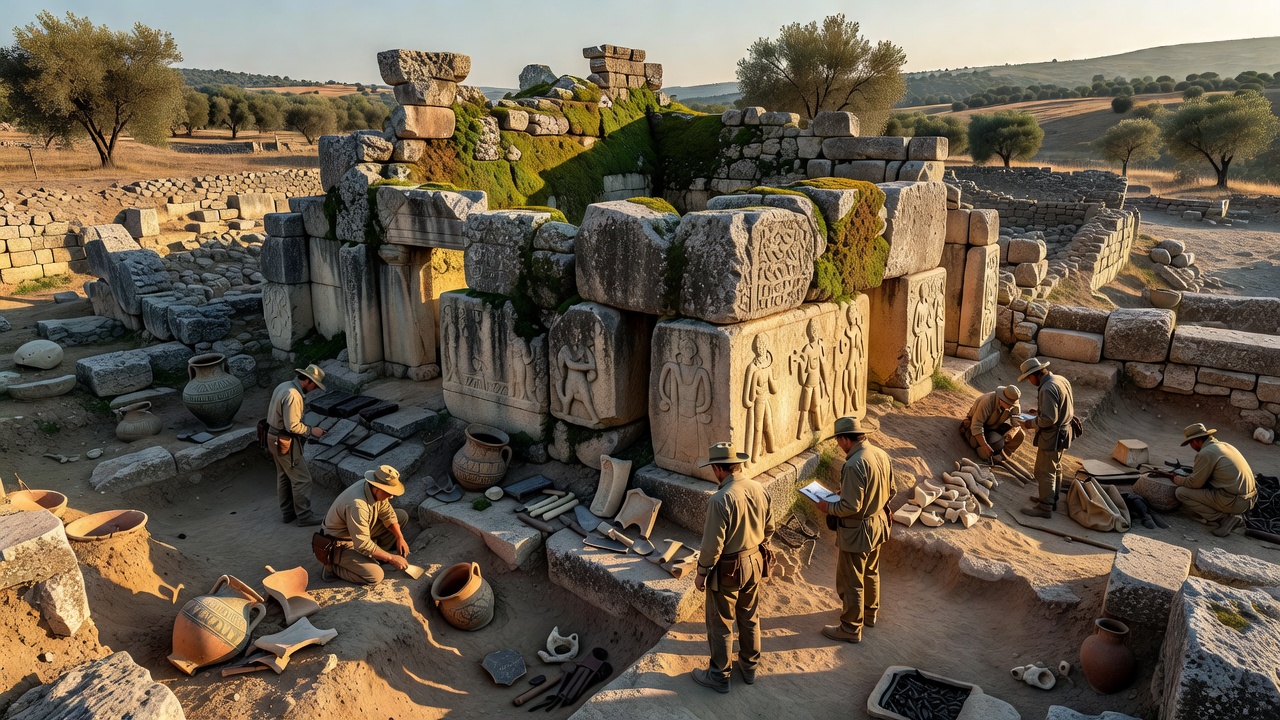
Recent excavations at the Belara site have uncovered artifacts that point to a previously unknown Etruscan presence in the region. Pottery shards featuring characteristic bucchero ware and inscribed fragments with Etruscan script were found in stratified layers dating between the 7th and 5th centuries BCE. Lead researcher Dr. Elena Rossi stated that carbon dating and stylistic analysis confirm these objects align with known Etruscan production centers in central Italy.
Excavation Methods and Results
Teams employed ground-penetrating radar and systematic trench digging across a 12-hectare area. They recovered over 200 ceramic vessels, bronze tools, and votive figurines. Several tombs contained skeletal remains showing burial practices consistent with Etruscan customs, including the use of stone sarcophagi oriented eastward. Isotopic analysis of the bones indicates a diet rich in olives and wine, typical of Etruscan settlements. No Roman-era overlays were detected beneath the primary occupation levels, suggesting the site was abandoned before Roman expansion.
Additional finds include a partial stone altar with incised symbols matching those at Volterra and a cache of gold jewelry featuring granulation techniques unique to Etruscan artisans. These discoveries challenge earlier assumptions that Belara was solely a medieval settlement built atop unrelated prehistoric remains. Soil samples reveal terracing and irrigation channels that mirror Etruscan agricultural engineering documented at other sites.
Broader Historical Implications
The linkage extends the known geographic range of Etruscan influence northward by approximately 150 kilometers. Scholars now propose that Belara served as a trading outpost connecting coastal ports with inland resources such as timber and metals. This connection may explain references in ancient texts to northern routes used by Etruscan merchants. Future seasons will focus on mapping potential road networks and examining nearby cave systems for additional inscriptions.
Local authorities have allocated funds to preserve the site and develop an interpretive center. The findings will be presented at the upcoming International Congress of Etruscan Studies. Ongoing conservation work ensures that fragile organic materials, including textile remnants, receive proper treatment. These developments enrich the understanding of pre-Roman Italy and highlight Belara's role in ancient Mediterranean networks.