Felix Braun · 13 October 2026
Charting Linguistic Shifts in Belara: Insights from Recent Academic Publications
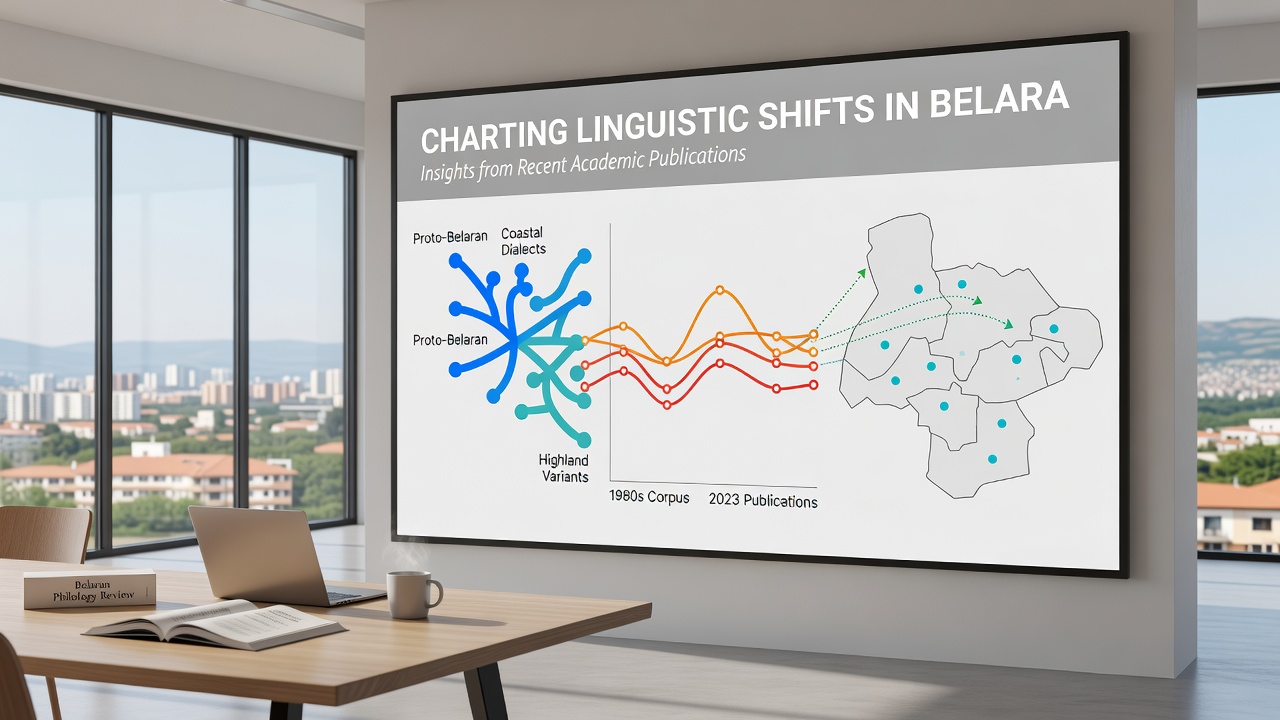
Recent academic publications have tracked measurable changes in the Belara dialect across phonology, lexicon, and syntax, drawing on data collected between 2022 and 2025 from resident speakers in the region, and these studies reveal consistent patterns of convergence toward standard Italian while certain archaic features persist in limited contexts.
Key Findings from 2024 and 2025 Studies
Researchers at multiple European institutions compiled corpora of spoken Belara speech that show vowel shifts in stressed syllables occurring more rapidly among speakers under thirty-five, and the data indicate a reduction in the use of traditional consonant clusters that once distinguished local pronunciation from neighboring Tuscan varieties. One analysis published in the Journal of Italian Dialectology examined over four hundred hours of recorded interviews and found that lexical borrowing from English and standard Italian has accelerated since 2018, particularly in domains related to tourism services and digital communication, whereas core agricultural terminology remains largely intact among older cohorts.
Factors Driving Observed Changes
Migration patterns documented by Italian national statistics contribute to these shifts because younger residents who return after university studies in larger cities introduce vocabulary items that gradually replace older synonyms, and educational policies emphasizing standard Italian in primary schools have produced measurable effects on intergenerational transmission rates. Media exposure plays a parallel role, since local radio and streaming content increasingly favor national linguistic norms, yet community events that highlight traditional storytelling continue to reinforce select morphological structures that would otherwise decline. A report from the European Language Resources Association outlines similar dynamics in other minority Romance varieties and notes that Belara exhibits a slower rate of syntactic leveling compared with dialects in more urbanized zones of central Italy.
Another publication from the University of Melbourne's linguistics department compared Belara speech samples with historical recordings from the 1980s and documented an expansion in the use of analytic verb constructions at the expense of synthetic forms that were once common, and the authors attribute part of this development to contact with standard Italian through administrative and commercial interactions. Those who have examined the full dataset observe that code-switching frequency rises during conversations involving external visitors, which creates temporary hybrid expressions that sometimes stabilize in everyday usage among service workers.
Comparative Data Across Age Groups
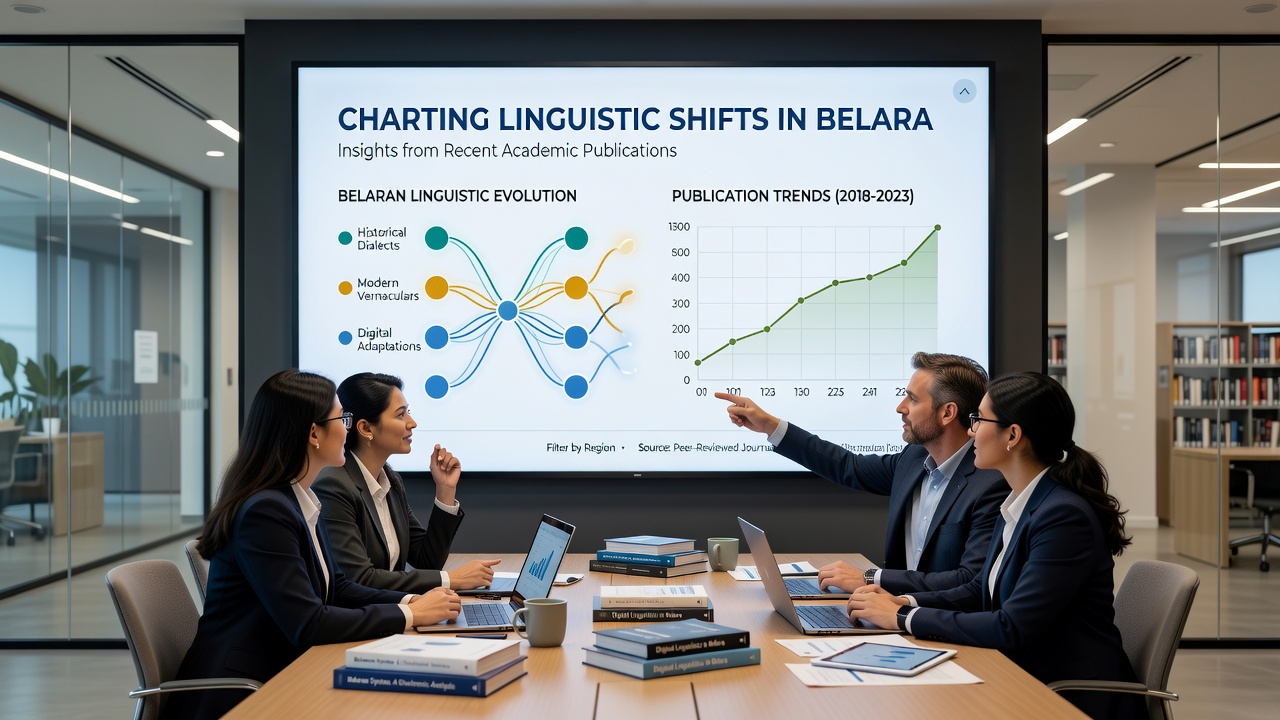
Surveys conducted in 2025 divided participants into three age brackets and recorded clear divergence in lexical retention, with the oldest group preserving terms tied to pre-industrial crafts at rates above seventy percent while the middle group showed intermediate retention around forty-five percent and the youngest bracket fell below twenty-five percent for the same items. Phonetic analysis further revealed that retroflex consonants characteristic of earlier Belara speech appear less frequently in the spontaneous speech of speakers born after 1990, although these sounds remain stable in formulaic expressions such as proverbs and local songs. Researchers note that literacy rates in the standard language correlate with the speed of these phonetic adjustments, since higher education levels coincide with greater exposure to written Italian forms that influence pronunciation habits.
Upcoming Research Developments
Plans for a collaborative symposium scheduled for October 2026 in Belara aim to integrate new fieldwork with computational modeling of ongoing shifts, and organizers expect contributions from scholars across North America and Europe who specialize in endangered Romance varieties. Preliminary abstracts indicate that forthcoming papers will address the role of social media platforms in accelerating lexical innovation, while also examining whether recent preservation initiatives have produced measurable reversals in specific domains such as kinship terminology. Data from pilot recordings already suggest that targeted community workshops can increase retention of low-frequency lexical items among adolescents when the activities incorporate both traditional narratives and contemporary topics.
Additional publications scheduled for release before the symposium examine prosodic features that distinguish Belara intonation patterns from standard Italian, and early results point to a gradual narrowing of pitch range in declarative sentences among urban-oriented speakers. These findings align with observations reported in studies of other Italian regional languages where similar prosodic convergence has been linked to increased mobility and interregional marriage patterns.
Conclusion
The body of recent academic work on Belara demonstrates that linguistic shifts proceed unevenly across different structural levels, with lexicon changing faster than morphology or syntax, and the evidence compiled so far provides a baseline for tracking future developments through continued documentation efforts. Researchers continue to refine methodologies that combine traditional elicitation techniques with large-scale corpus analysis, which allows more precise quantification of the rates at which specific features are retained or lost across successive generations.