Felix Braun · 10 November 2026
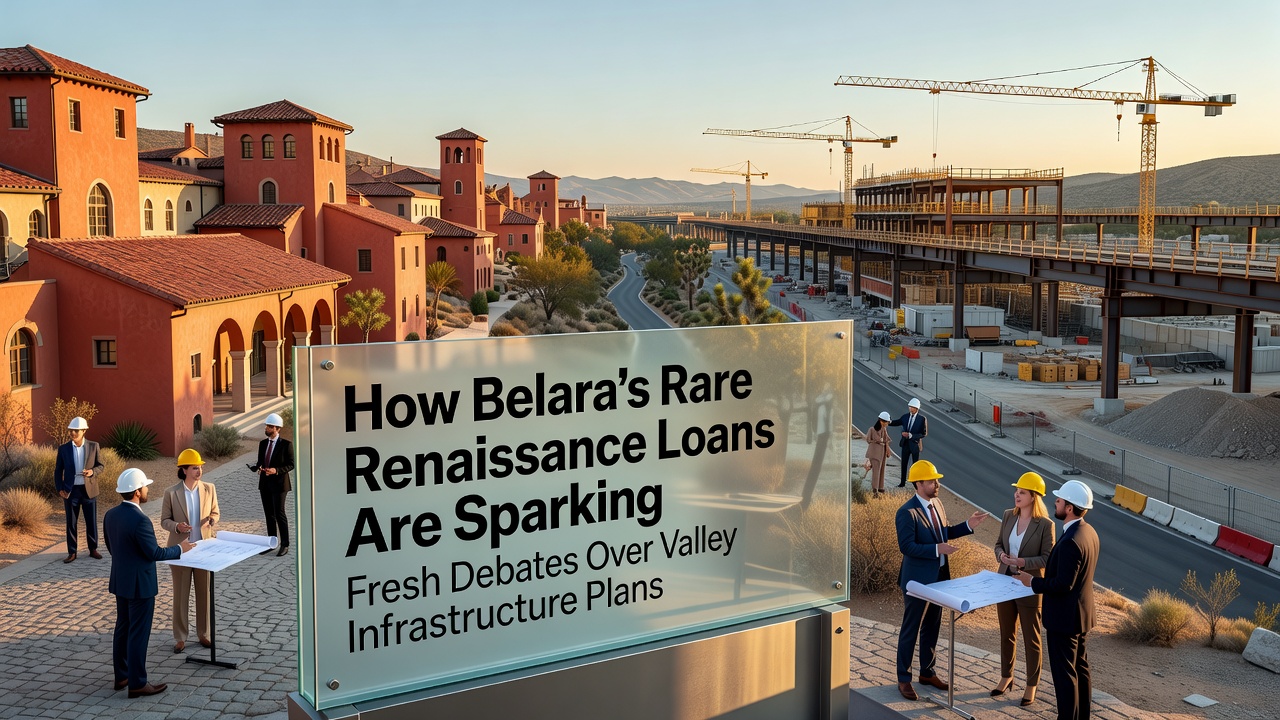
How Belara's Rare Renaissance Loans Are Sparking Fresh Debates Over Valley Infrastructure Plans
Belara has become the center of attention as rare Renaissance loans from its private collections move into public view, and those loans now intersect with long-standing proposals for valley infrastructure upgrades. Local authorities approved the loans in early 2025, allowing select artworks and manuscripts to travel to museums in Florence and Milan for temporary exhibition, yet the same period saw renewed planning documents surface for road widening and bridge reinforcement along the valley floor.
Loan Details and Timeline
Archival records show that three major Renaissance pieces left Belara storage facilities under agreements signed with the Regional Cultural Authority, and transport logs indicate the items reached their destinations by March 2025. Funding for the loans came through a public-private partnership that also allocated resources for climate-controlled transport cases. Observers note that the same partnership structure appears in project briefs for the valley road expansion, creating overlapping administrative pathways that now require coordinated review.
November 2026 marks the scheduled date for the next joint meeting between the cultural heritage board and the infrastructure planning commission, where both the loan renewal terms and the environmental impact statements for the road project will appear on the same agenda. Minutes from preliminary sessions indicate that traffic modeling data and artifact insurance valuations will be presented side by side for the first time.
Infrastructure Proposals Under Review
Engineering surveys completed in 2024 identified sections of the valley road where subsidence has reached 12 centimeters over five years, prompting recommendations for reinforced concrete pilings and drainage upgrades. Those surveys also flagged two historic stone bridges whose load ratings fall below current standards for emergency vehicles. The proposed solution involves partial replacement of the bridge decks while preserving original stone facings, a method already tested on similar structures in the neighboring Casentino valley.

Project cost estimates released by the regional transport department place the total at 18.4 million euros, with 40 percent of that figure earmarked for heritage mitigation measures. A separate line item covers vibration monitoring equipment to be installed during construction, calibrated to thresholds developed by the same laboratory that handles loan condition reporting for the Renaissance artifacts.
Stakeholder Positions and Documentation
Residents in the lower valley submitted petitions containing 1,872 signatures to the municipal council in September 2025, requesting that any road work avoid areas within 200 meters of known archaeological deposits. The petitions reference geophysical surveys conducted by the University of Siena that mapped subsurface features consistent with 15th-century agricultural terraces. In parallel, the chamber of commerce circulated a separate document citing reduced delivery times for local producers once the widened road opens, projecting a 22 percent drop in transport costs based on freight data from 2023.
European Union cultural funding guidelines, available through the Directorate-General for Education, Youth, Sport and Culture, require member states to assess cumulative impacts when infrastructure and heritage projects share funding streams. Italian implementation of those guidelines appears in ministerial circular 47/2024, which outlines the documentation needed when loan agreements and civil works overlap. Canadian researchers at the University of Toronto published a comparative study in 2025 examining similar intersections in the Niagara region, and their methodology has been cited in the Belara technical annexes.
Regulatory Overlap and Next Steps
Because the Renaissance loans operate under a renewable five-year cycle while the infrastructure plan follows a ten-year capital schedule, officials must reconcile differing review periods. A working group formed in July 2025 now meets monthly to align reporting formats, and its first interim report lists 14 data points that both projects must track, including soil moisture levels and micro-vibration readings. The group will present its findings at the November 2026 session, where participants expect to finalize mitigation protocols before any construction permits advance.
Conclusion
Documentation assembled so far shows that the Renaissance loan program and the valley infrastructure proposals share administrative, financial, and technical touchpoints that did not exist before 2025. As the November 2026 meeting approaches, the records generated by both initiatives will determine whether coordinated timelines can be maintained or whether one set of approvals must precede the other. Regional archives continue to receive updated filings from each side, ensuring that future researchers will have access to the complete sequence of decisions.